
Crispy Korean Pancakes (Pajeon) for Quick Flavorful Bites
Last Updated on March 13, 2026 by Valdemar
There’s something incredibly satisfying about the delightful crunch of Korean Pancakes, or Pajeon, as they hit your plate fresh off the skillet. I first tried these savory treats during a cozy gathering, where the aroma of sizzling vegetables filled the air, and every bite transported me to the bustling streets of Seoul. Whether enjoyed as a quick snack, appetizer, or part of a festive meal, these pancakes celebrate the vibrant flavors of fresh produce all wrapped up in a crisp, golden exterior.
What I love most about Pajeon is their versatility; you can customize the filling to suit your cravings or dietary needs, making it a perfect addition to any menu. Plus, with a quick prep time, you can whip them up any time you feel a craving for homemade goodness. So, grab your ingredients and join me in making these irresistible pancakes that are sure to impress your family and friends!
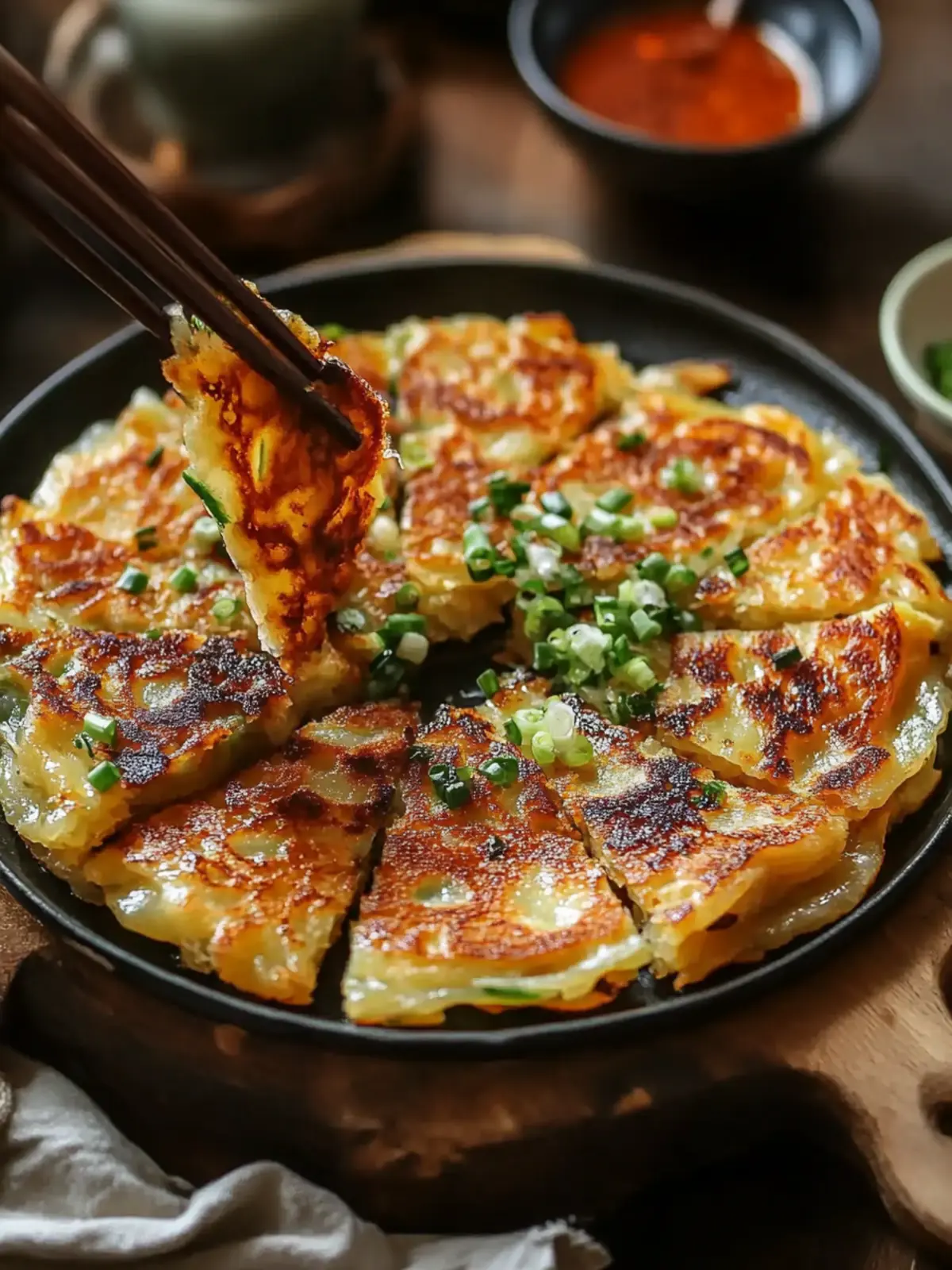
Why are Korean Pancakes (Pajeon) irresistible?
Crispy Texture: Each pancake boasts a delightful crunch while remaining tender on the inside, thanks to the combination of fresh vegetables and a light batter.
Quick Prep: With minimal ingredients and a straightforward process, you can enjoy these pancakes in no time, ideal for busy weeknights or spontaneous gatherings.
Customizable Flavors: Mix it up by adding your favorite proteins or vegetables think shrimps, bell peppers, or even spicy chili for an extra kick!
Cultural Delight: Experience a taste of Korean culture with every bite, bringing comfort food to your kitchen that your loved ones will adore. Don’t forget to check out how to make gluten-free options if you have dietary restrictions!
Korean Pancakes (Pajeon) Ingredients
For the Batter
All-Purpose Flour Provides structure to the pancakes and can be substituted with a gluten-free flour blend for a gluten-free version.
Water Hydrates the flour and forms the batter; no substitutions needed.
Large Egg Binds the ingredients and adds moisture; use a flax egg (1 tbsp flaxseed meal + 2.5 tbsp water) for a vegan alternative.
Salt Enhances flavor; adjust to taste.
Black Pepper Adds a hint of spice; optional, can be omitted for a milder flavor.
For the Vegetables
Green Onions (Scallions) Adds freshness and flavor; can substitute with chives.
Carrot (Julienned) Provides sweetness and crunch; can use parsnips as an alternative.
Zucchini (Julienned) Contributes moisture and texture; summer squash works as a substitute.
For Frying
Vegetable Oil Used for frying to achieve crispiness; any neutral oil (canola, sunflower) works perfectly.
How to Make Korean Pancakes (Pajeon)
Prepare Ingredients: Start by washing and julienning the carrot and zucchini, then chop the green onions into bite-sized pieces. This brings your flavors to life with freshness!
Make Batter: In a mixing bowl, whisk together the all-purpose flour, water, egg, salt, and pepper until the mixture is smooth and lump-free. You want a silky batter that coats your veggies perfectly.
Combine Vegetables: Gently fold the prepared green onions, carrot, and zucchini into the batter until they re evenly coated. Each veggie adds color and flavor to our delightful pancakes!
Heat Oil: In a non-stick skillet, heat about a tablespoon of vegetable oil over medium heat. Give it a moment to get nice and hot this ensures crispiness!
Cook Pancakes: Pour a ladle of batter into the skillet, using the back of the ladle to spread it into a pancake shape. Fry each side until golden brown this should take around 3-4 minutes per side.
Repeat: After flipping, add more oil if necessary, and repeat the process with the remaining batter. Each pancake should be crispy and delicious!
Serve: Serve them up hot, paired with your favorite dipping sauce or alongside some pickled veggies for a refreshing contrast.
Optional: Garnish with sesame seeds for an extra touch of flavor and crunch.
Exact quantities are listed in the recipe card below.
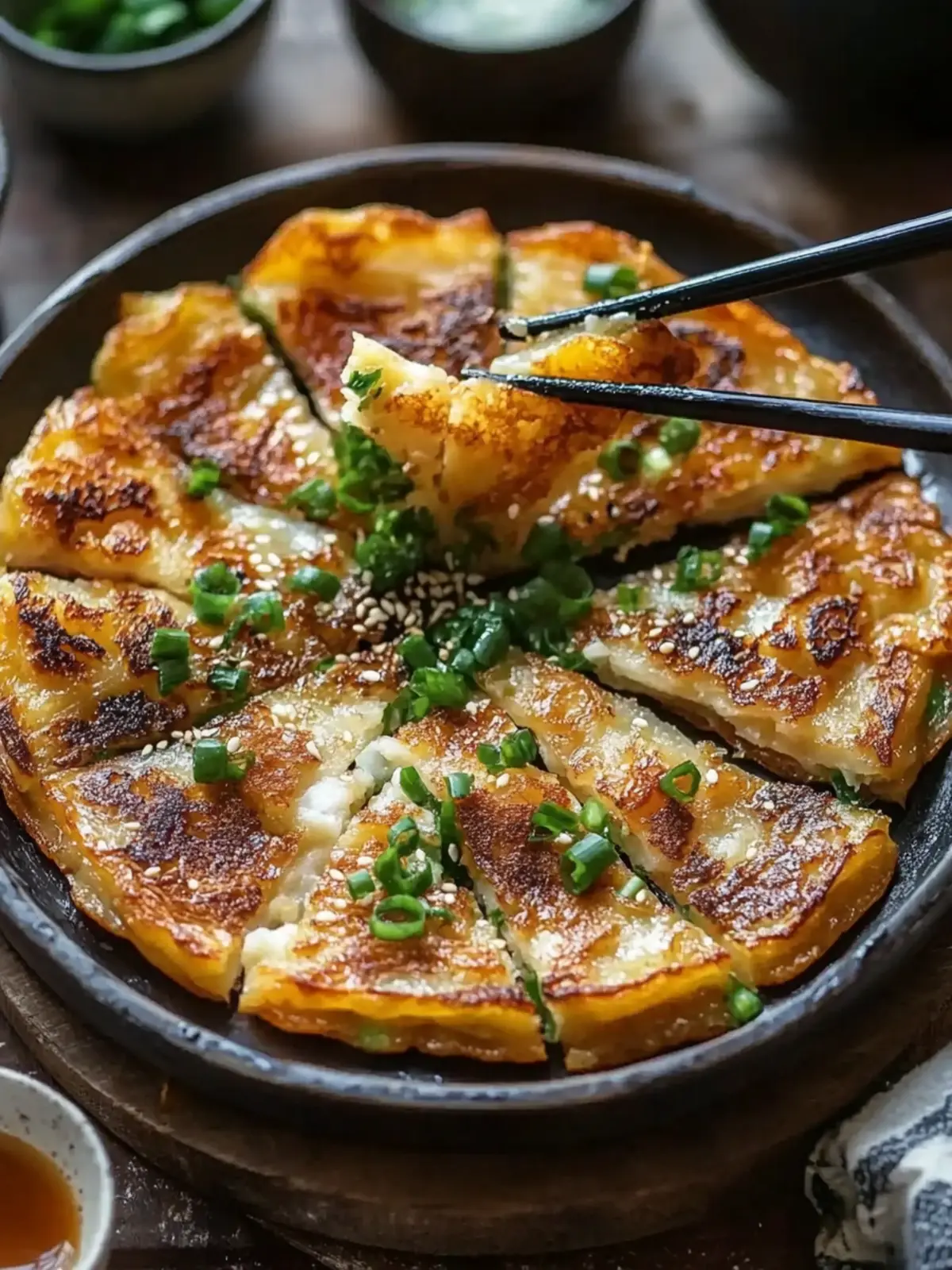
How to Store and Freeze Korean Pancakes (Pajeon)
Fridge: Store leftover Korean pancakes in an airtight container for up to 2 days. Place parchment paper between layers to prevent sticking and maintain crispiness.
Freezer: For longer storage, freeze the pancakes in a single layer on a baking sheet, then transfer to a freezer bag for up to 1 month. Reheat directly from frozen.
Reheating: To restore the pancakes’ crispiness, reheat them in a skillet over medium heat for a few minutes on each side. Avoid the microwave, as it can make them soggy.
Make-Ahead: Feel free to prepare the batter ahead of time and let it rest in the fridge for up to 24 hours for the best flavor and texture when you re ready to cook.
What to Serve with Korean Pancakes (Pajeon)?
Creating the perfect meal to accompany your crispy Korean pancakes elevates the experience into something truly special. Let’s explore some delightful pairings that complement these savory treats!
Soy Dipping Sauce: A classic pairing, the salty and umami-rich flavor enhances the taste of Pajeon, offering that essential contrast of flavors.
Pickled Vegetables: The tanginess of pickled radishes or cucumbers adds a refreshing crunch that balances the pancake’s richness and offers vibrant color on your plate.
Crisp Green Salad: A light and bright salad featuring mixed greens, cherry tomatoes, and a zesty vinaigrette provides a delightful counterpoint to the heavier pancakes, keeping the meal balanced.
Spicy Korean Sauce: Add a kick with a spicy gochujang dip. The heat will complement the savory flavors beautifully, making each bite an adventure.
Tasty Spicy Kimchi: This fermented side dish introduces a bold flavor profile, enhancing the overall experience with a satisfying crunch and vibrant spice.
Steamy White Rice: Serve alongside plain or flavored rice to soak up the savory flavors of the pancakes, bringing an authentic touch to your meal.
Ginger Tea: Warm ginger tea offers a soothing contrast to the savory pancakes, nicely cleansing the palate after each bite while bringing comfort to your table.
Fresh Mango Slices: For a sweet finish, juicy mango slices will cleanse your palate and add a tropical flair, making the meal even more enjoyable.
Chilled Soju or Sake: Enjoy this traditional drink with Pajeon to enhance the dining experience; the smooth flavor pairs perfectly with the savory bites.
Korean Pancakes (Pajeon) Variations
Now’s your chance to personalize these crispy delights! Dive into flavor combinations that excite your palate and suit your dietary needs.
- Gluten-Free: Replace all-purpose flour with a gluten-free flour blend for a deliciously crispy pancake that everyone can enjoy.
- Vegan Twist: Swap the egg with a flax egg (1 tbsp flaxseed meal + 2.5 tbsp water) for a plant-based version that doesn’t compromise on taste.
- Heartier Pancakes: Add diced cooked shrimp, squid, or chicken to the batter for an extra protein boost, making it a satisfying main dish.
- Peppery Kick: Mix in chopped chili peppers into the batter to spice things up let your senses awaken with each bite!
- Savory Blend: Incorporate mushrooms or bell peppers into your veggie mix for an earthy, umami flavor that complements the sweetness of the other ingredients.
- Herb Infusion: Elevate freshness by adding fresh herbs like cilantro or basil to the batter, awakening the Pajeon with fragrant notes.
- Zesty Flavor: Drizzle a touch of lemon juice into the batter for a bright twist that enhances the overall taste of the pancakes.
- Cheesy Addition: Fold in shredded cheese of your choice for a gooey, indulgent version that adds richness to your quick bites.
Make Ahead Options
These crispy Korean pancakes (Pajeon) are perfect for meal prep enthusiasts! You can chop the green onions, julienne the carrot and zucchini, and even prepare the batter up to 24 hours in advance. Store the chopped vegetables in an airtight container in the refrigerator to maintain their freshness and prevent browning. When you’re ready to enjoy your Pajeon, simply mix the prepped vegetables into the batter, heat the oil, and cook them in a skillet for about 3-4 minutes per side until golden brown. This means you can spend less time in the kitchen and still savor delicious, homemade pancakes without the last-minute rush!
Expert Tips for Korean Pancakes
Hot Oil: Ensure the oil in the skillet is hot before adding the batter for maximum crispiness and a golden crust.
Spatula Choice: Use a wide spatula when flipping the pancakes to prevent breaking them and maintain their shape.
Batch Cooking: Cook pancakes in smaller batches to avoid overcrowding the pan, ensuring even cooking and a perfect texture in each Korean pancake.
Vegetable Variations: Don t hesitate to experiment; add cooked shrimp, mushrooms, or bell peppers to enhance flavor and texture in your Pajeon.
Resting Time: Allow the batter to rest for a few minutes before cooking. This helps enhance the texture and lets the flavors meld together beautifully.
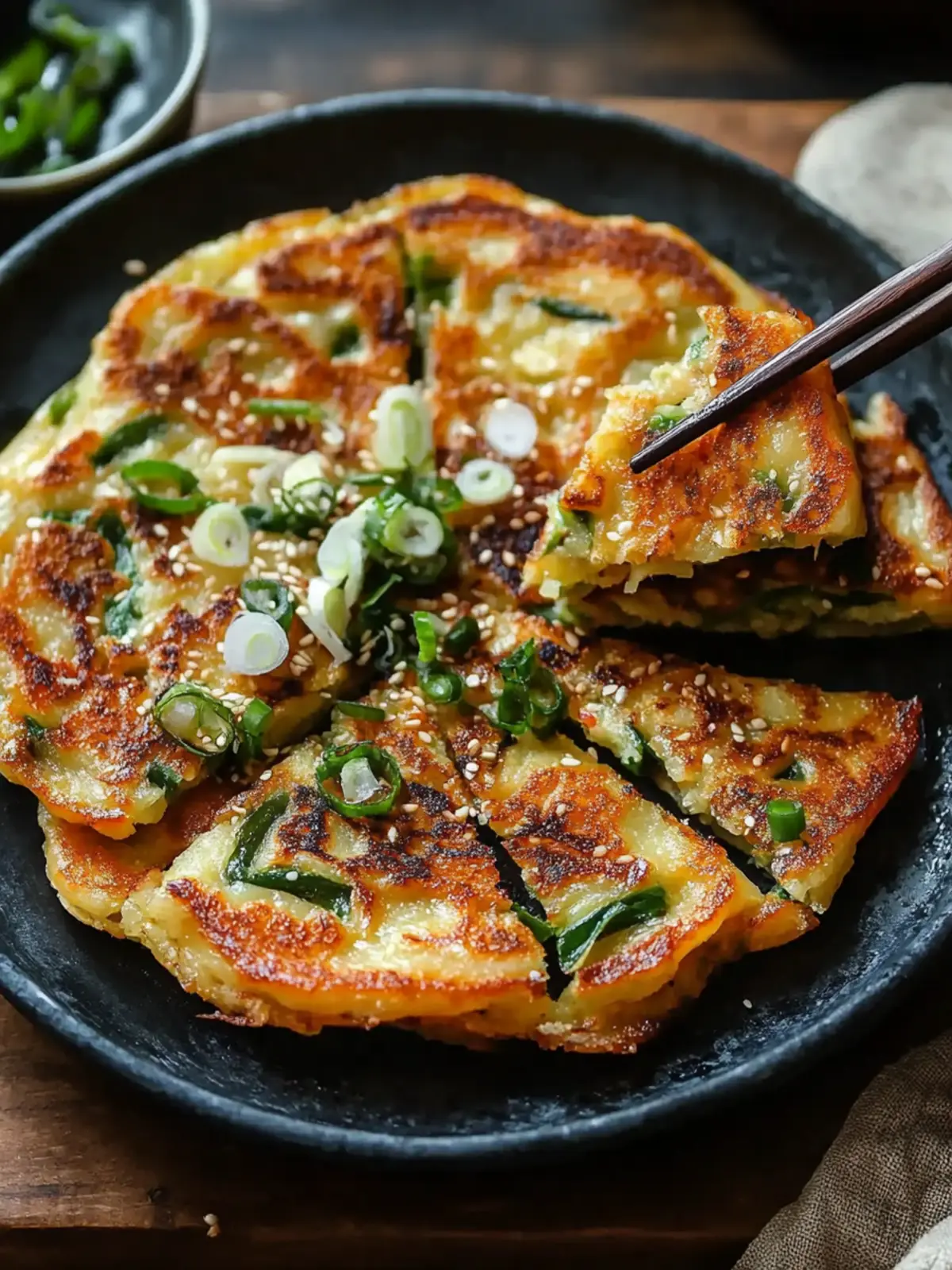
Korean Pancakes (Pajeon) Recipe FAQs
What type of flour should I use for Korean pancakes?
You can use all-purpose flour for the traditional recipe, but if you’re looking for a gluten-free option, a gluten-free flour blend works wonderfully to retain texture and flavor.
How can I store leftover Korean pancakes?
Store any leftover Korean pancakes in an airtight container in the refrigerator for up to 2 days. For best results, place parchment paper between layers to keep them from sticking together and to help maintain their crispy texture.
Can I freeze Korean pancakes?
Absolutely! To freeze Korean pancakes, lay them out in a single layer on a baking sheet and freeze until firm. Then, transfer them to a freezer bag, keeping them flat. They can be frozen for up to 1 month. When you’re ready to enjoy them, reheat them directly from frozen; just cook in a skillet over medium heat for a few minutes on each side until crispy.
What common issues should I keep in mind when making Pajeon?
One common issue is soggy pancakes, usually due to oil that isn t hot enough. Make sure your oil is sizzling before adding the batter. If they fall apart when flipping, use a wide spatula to support the pancake fully. If you find the batter is too thick, you can add a little more water to achieve the right consistency.
Are there any dietary considerations when making Korean pancakes?
Yes, if you’re cooking for someone with allergies or dietary restrictions, you can easily adapt this recipe. To make it vegan, swap the egg for a flax egg (1 tbsp flaxseed meal mixed with 2.5 tbsp water). Always double-check your ingredients, especially the flour and any added proteins, to ensure they meet dietary needs.