
Korean Style Pot Roast: Comforting Flavor for Cozy Nights
Last Updated on March 13, 2026 by Valdemar
When the chill of autumn sets in, I find myself craving comforting meals that envelop me in warmth. That’s when I turn to my beloved Korean Style Pot Roast. The moment the succulent chuck roast begins to braise, the air fills with the enticing aroma of soy sauce, ginger, and that signature spicy kick from gochujang. It s a delightful reminder of cozy family dinners when heartwarming dishes take center stage.
The beauty of this recipe lies in its simplicity; it transforms everyday ingredients into an extraordinary feast with just a dash of patience. Whether you opt for the Dutch oven or slow cooker method, you re guaranteed melt-in-your-mouth tenderness that will leave everyone at the table begging for seconds.
Join me as we embark on this culinary adventure, bringing the rich tradition of Korean cuisine into our homes with this hearty, flavorful pot roast that s destined to become a comforting favorite for years to come.
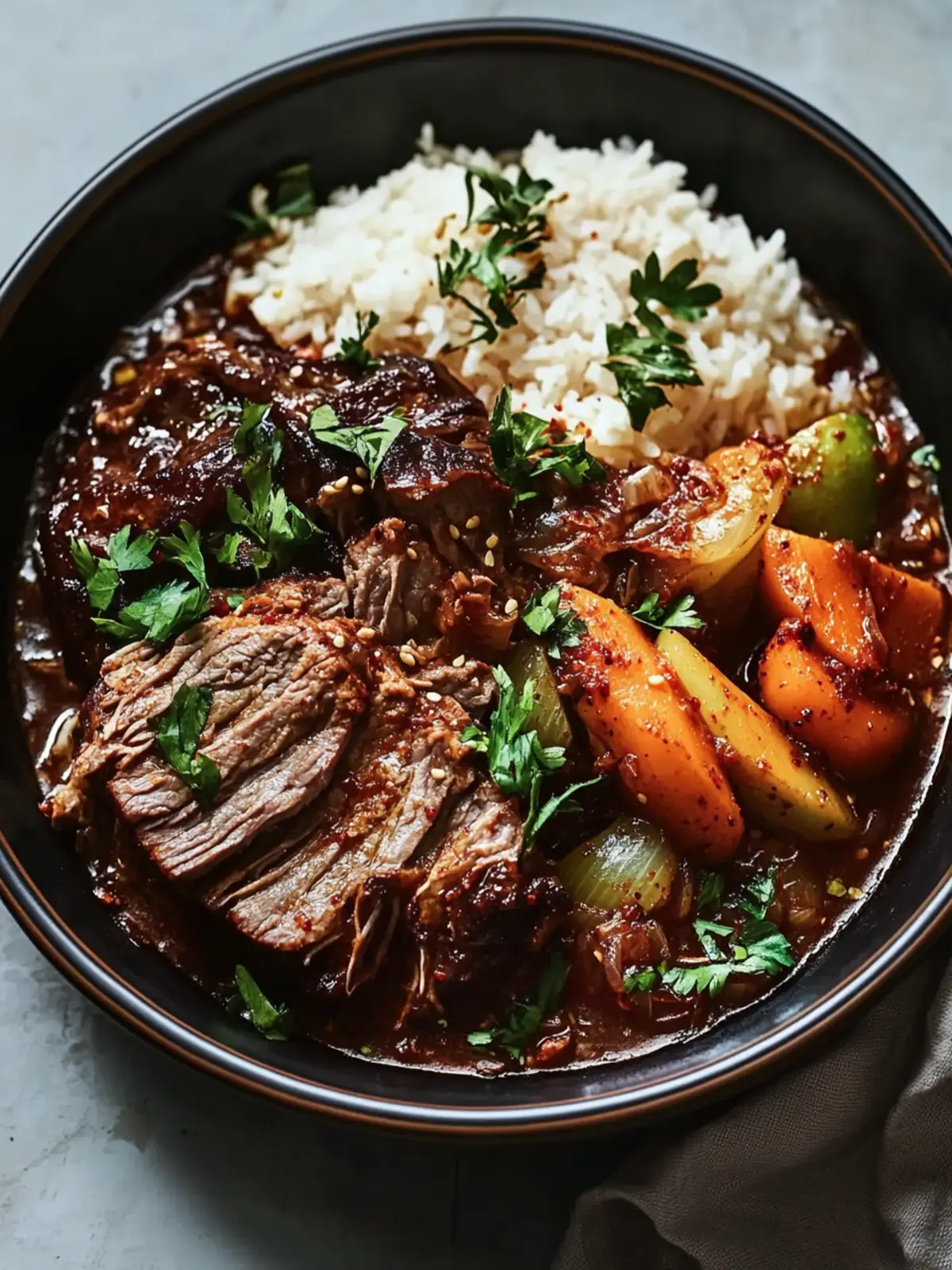
Why is Korean Style Pot Roast a Must-Try?
Comforting, Every bite of this pot roast envelops you in a hug of flavor, making it perfect for chilly nights. Simplicity, With straightforward steps and basic ingredients, it s accessible for all home cooks. Aromatic, The enticing scents of soy sauce, ginger, and gochujang fill your kitchen as it braises. Versatility, Whether made in a Dutch oven or slow cooker, it adapts beautifully to your cooking style. Crowd-Pleasing, Its hearty, rich taste is sure to impress family and friends, making it an ideal dish for gatherings. You might also enjoy learning how to elevate your meals with homemade side dishes like kimchi, which adds a tangy contrast to this rich pot roast.
Korean Style Pot Roast Ingredients
For the Pot Roast
Chuck Roast This primary protein provides rich flavor and tenderness; can substitute with brisket if needed.
Kosher Salt Enhances flavor while seasoning the meat, ensuring every bite is delicious.
Vegetable Oil Used for browning the meat; can replace it with canola or olive oil if desired.
For the Aromatics
Sweet Onion Adds a hint of sweetness and depth; yellow onion can be a great alternative.
Garlic Cloves Infuses aromatic flavor into the dish; garlic powder works as a quick sub if you’re in a bind.
Grated Fresh Ginger Provides warmth and spice; ground ginger is an option for those in a hurry.
For the Flavor Base
Gochujang Paste Adds that signature umami and heat; swap with another chili paste if unavailable.
Brown Sugar Balances the dish’s flavors with sweetness; maple syrup or coconut sugar can work alternatively.
Low-Sodium Soy Sauce or Tamari Elevates the umami flavor while controlling sodium levels; tamari is a great gluten-free choice.
Beef Stock Adds moisture and flavor throughout the cooking process; vegetable stock can lighten things up if preferred.
For the Finish
Fresh Cilantro Acts as a vibrant garnish; green onions can provide a milder taste if you like.
Kimchi A traditional Korean side dish that adds authenticity; it s optional but strongly recommended for a full experience.
How to Make Korean Style Pot Roast
Prepare the Meat: Start by cutting your chuck roast into 3-inch pieces. Generously season each piece with kosher salt to enhance its flavor and ensure a delicious outcome.
Brown the Meat: In a Dutch oven, heat vegetable oil over medium-high heat. Carefully add the seasoned meat and brown on all sides for about 4-5 minutes, which builds wonderful flavor (this step is optional, but recommended!).
Saut Aromatics: Remove the browned meat and in the same pot, add sliced sweet onions, garlic cloves, and grated fresh ginger. Saut for 3-5 minutes or until softened and fragrant, soaking in those delightful flavors.
Combine Sauce Ingredients: Stir in gochujang, brown sugar, and low-sodium soy sauce, mixing well until everything is beautifully combined. This will form the base of your rich sauce.
Simmer: Add the beef stock to the mixture, ensuring it covers the meat. Bring everything to a simmer, then cover and place in a preheated oven at 350 °F (175 °C). Allow it to cook for 2 hours until tender.
Serve: Once done, carefully present the pot roast family-style. Garnish with fresh cilantro before serving, alongside rice and kimchi for a delightful and authentic experience.
Optional: Pair with a side of steamed vegetables for added color and nutrition.
Exact quantities are listed in the recipe card below.
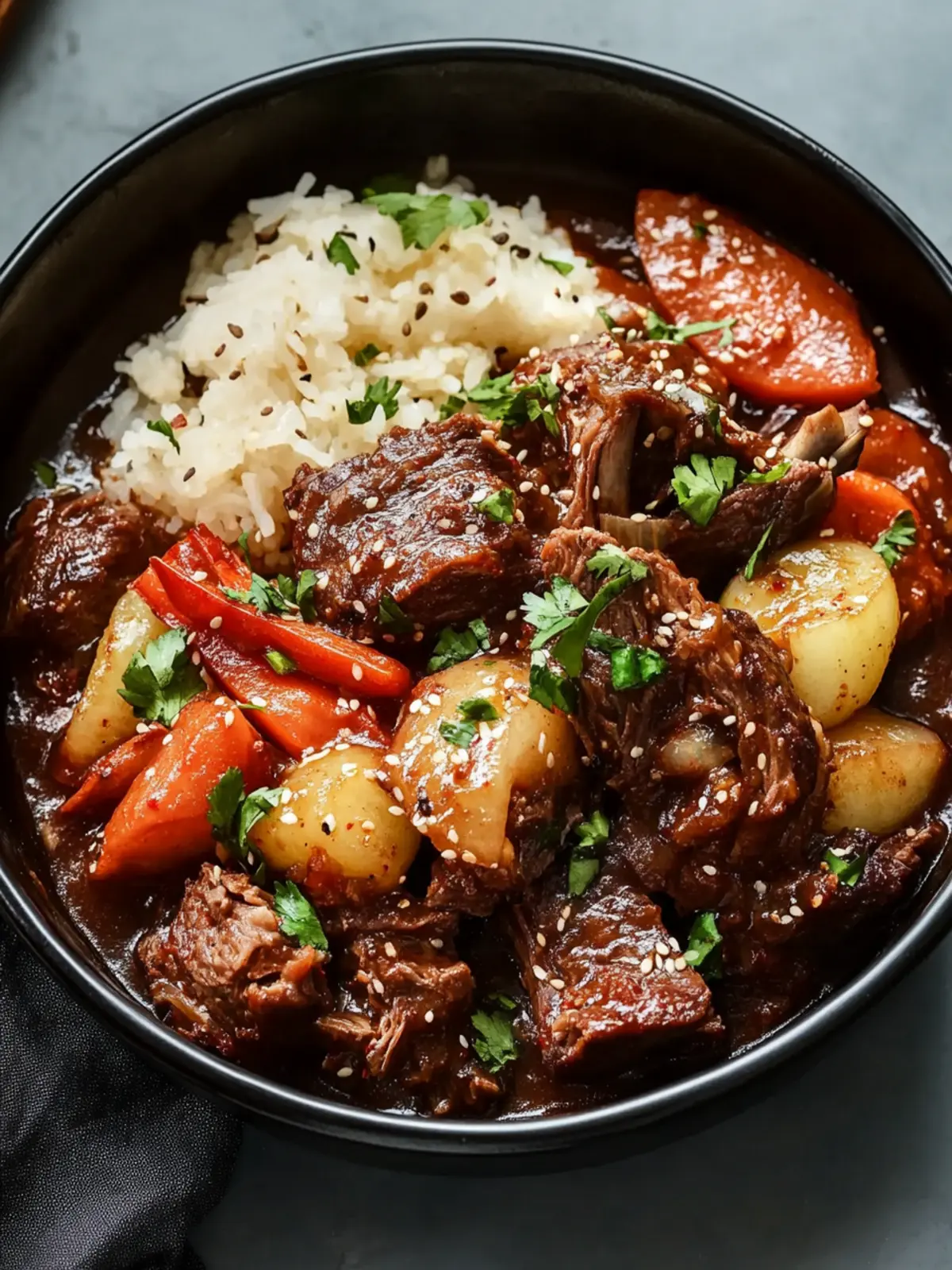
Korean Style Pot Roast Variations
Feel free to tweak the recipe to match your tastes and dietary preferences while keeping that wonderful comfort food essence.
Vegetable Addins: Include chopped carrots, potatoes, or mushrooms to create a hearty, one-pot meal that adds nutrients and flavor. The veggies will absorb the rich sauce, making them deliciously satisfying.
Pork Alternative: Swap out the chuck roast for pork shoulder or pork belly for a different protein option that offers a unique flavor twist. The tenderness achieved with pork will still bring comfort to your dining experience.
Spicy Boost: Add extra gochujang or thinly sliced fresh chili peppers to crank up the heat level if you and your family love a spicy kick in your meals. This will awaken your taste buds and add depth to the dish.
Coconut Milk Creaminess: Replace part of the beef stock with coconut milk for a slightly sweet and creamy version, enhancing with tropical flavors that bring an interesting twist. It pairs unexpectedly well with the savory components!
Gluten-Free Version: Ensure a gluten-free dish by using tamari instead of soy sauce and double-checking the gochujang for any gluten ingredients. The flavors remain beautifully intact without compromising on taste.
Cilantro Twist: Instead of fresh cilantro for garnish, top with finely chopped green onions for a milder herbaceous note that still adds freshness to the pot roast.
Smoky Flavor: Incorporate a tablespoon of smoked paprika into the sauce for an extra layer of depth and smokiness. This change will create an enticing aroma and flavor profile that surprises the palate.
Ingredients Adaptation: If you love experimenting, try using different types of mushrooms or switch brown sugar for honey or agave to tailor sweetness and flavor to your liking. Each substitute tells a new story in your pot roast!
Expert Tips for Korean Style Pot Roast
Sear for Flavor: Searing the meat before braising enhances its flavor. Don t skip this step for the best Korean Style Pot Roast!
Cooking Time Adjustment: If your chuck roast differs in size, plan for approximately 20 minutes per pound in the Dutch oven to achieve perfect tenderness.
Watch the Liquid Levels: Keep an eye on the liquid while cooking; add more beef stock if it seems dry. Your pot roast should stay moist!
Reinvent Leftovers: Repurpose any leftover pot roast into delicious tacos or sandwiches for a fun and different meal.
Slow Cooker Tip: If using a slow cooker, extend cooking time to 6-8 hours on low. This allows for equally tender results!
Make Ahead Options
These Korean Style Pot Roast preparations are perfect for busy home cooks looking to save time during their weeknight meals! You can season the chuck roast with kosher salt and even cut it into pieces up to 24 hours in advance; just keep the seasoned meat refrigerated to maintain its flavor. Additionally, you can saut the aromatics (onions, garlic, and ginger) and store them in an airtight container for up to 3 days. When you’re ready to enjoy your meal, simply combine the prepped ingredients in your pot, add the sauce components, and proceed to simmer and cook as directed. This approach ensures that your pot roast will be just as delicious and tender without the afternoon rush!
What to Serve with Korean Style Pot Roast?
Elevate your hearty meal with mouthwatering side dishes that perfectly complement this comforting pot roast.
- Steaming White Rice: The fluffy texture of rice soaks up the rich sauce, making each bite a delightful experience.
- Kimchi: This tangy, fermented side adds a spicy crunch that contrasts beautifully with the tender roast.
- Roasted Vegetables: A medley of colorful vegetables enhances the dish s visual appeal while offering a nutritious balance to the meal.
- Pickled Cucumbers: Refreshing and tangy, these add a brightness that cuts through the richness of the pot roast.
- Garlic Mashed Potatoes: Creamy and comforting, these potatoes make for a perfect taste pairing with the savory flavors of the roast.
- Miso Soup: A warm bowl of miso enhances the meal’s Japanese influences, providing a light, savory contrast to the hearty pot roast.
- Soba Noodles: Lightly dressed noodles add a unique texture, making for an interesting twist compared to traditional rice.
- Spinach Salad: A simple salad with sesame dressing brings freshness to the table, connecting beautifully with the pot roast’s flavors.
- Brownies or Mochi for Dessert: Finish your meal with a sweet note; fudgy brownies or chewy mochi provide a delightful contrast to the savory elements.
- Red Wine: A glass of fruity red wine enhances the pot roast’s rich flavors, rounding out the dining experience beautifully.
Storage Tips for Korean Style Pot Roast
Fridge: Store leftover Korean Style Pot Roast in an airtight container for up to 3-4 days. This helps maintain its rich flavor and tenderness.
Freezer: Freeze portions of the pot roast in airtight bags or containers for up to 3 months. Make sure to remove as much air as possible to prevent freezer burn.
Reheating: When ready to enjoy, thaw overnight in the fridge and reheat gently on the stovetop or in the oven until warmed through add a splash of beef stock for moisture if needed.
Serving Suggestions: This pot roast tastes great reheated alongside fresh rice or in a sandwich, making it versatile for leftover meals.
Korean Style Pot Roast Recipe FAQs
What type of beef should I use for Korean Style Pot Roast?
For the best results, I recommend using chuck roast, which provides rich flavor and tenderness. If you’re looking for a different option, brisket can also work, but be mindful that cooking times may vary slightly.
How do I know if my ingredients are fresh enough?
When selecting ingredients, look for fresh ginger that is firm and smooth, onions without dark spots, and beef that is bright red without any off smells. If you’re using gochujang, ensure it’s within its expiration date for optimal flavor.
How should I store leftover pot roast?
To store leftover Korean Style Pot Roast, place it in an airtight container and refrigerate for up to 3-4 days. This helps retain its tenderness and flavor.
Can I freeze Korean Style Pot Roast?
Absolutely! Freeze portions of the pot roast in airtight bags or containers for up to 3 months. Make sure to remove as much air as possible to prevent freezer burn. When you’re ready to enjoy, thaw overnight in the fridge and reheat gently on the stovetop or in the oven until warmed through.
What should I do if my pot roast is too tough?
If your pot roast turns out tough, it s likely that it needs more cooking time. Return it to the oven or slow cooker, adding a bit of broth or water if needed, and cook for an additional 30 minutes to 1 hour. This allows the connective tissues in the meat to break down further, leading to a more tender result.
Are there any dietary considerations for Korean Style Pot Roast?
This recipe contains beef and gluten from soy sauce. For a gluten-free option, you can substitute soy sauce with tamari and use vegetable stock. Always check individual ingredient labels to accommodate any allergies or dietary needs.